Accuracy needs a system,
not a claim.
Accuracy means the platform shows the right evidence, detects poor data and knows when to say “check this in the field.” It does not mean every alert is a diagnosis or every model is correct.
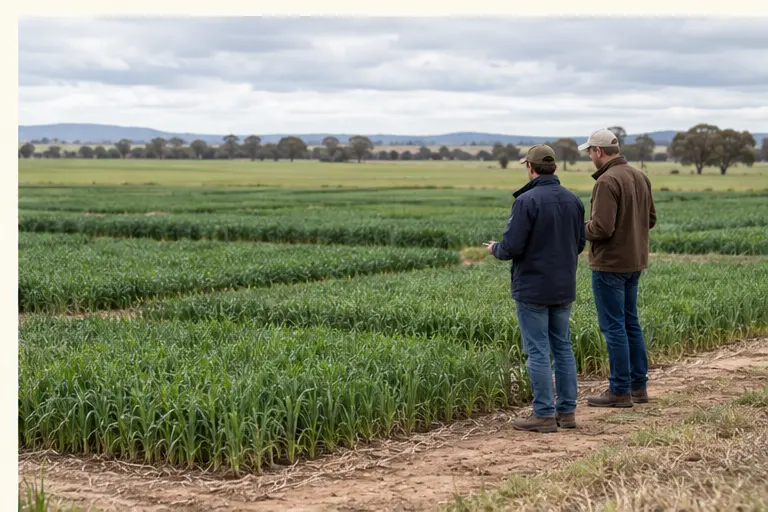
01 · Baseline before intelligence
Map zones, confirm soil profile and irrigation layout, collect relevant laboratory soil results, photograph starting conditions and agree the farm question.
02 · Installation and calibration
Record exact location, depth, soil contact, device ID and time. Validate probe readings after irrigation or rainfall. Re-check after disturbance or seasonal change.
03 · Continuous quality checks
Flag missing, out-of-range, flatline and sudden-jump data. Compare to weather, irrigation records and nearby contextual signals before using it in an alert.
04 · Confidence-based alerts
Show the source, freshness, data quality, zone coverage, uncertainty and next verification action. Low-confidence signals create a check task, not a recommendation.
05 · Human review and feedback
Growers and advisers confirm, reject or annotate findings. Those outcomes become labelled data for later evaluation - never silent model training.
06 · Measured model release
Any future predictive model is tested against held-out farm data by crop and region. It requires precision, recall, false-alert and missed-event reporting before deployment.