Simple, serviceable field hardware.
LivingShield does not need to manufacture exotic sensors. The product integrates durable, commercially available field devices through a controlled installation and data-quality process.
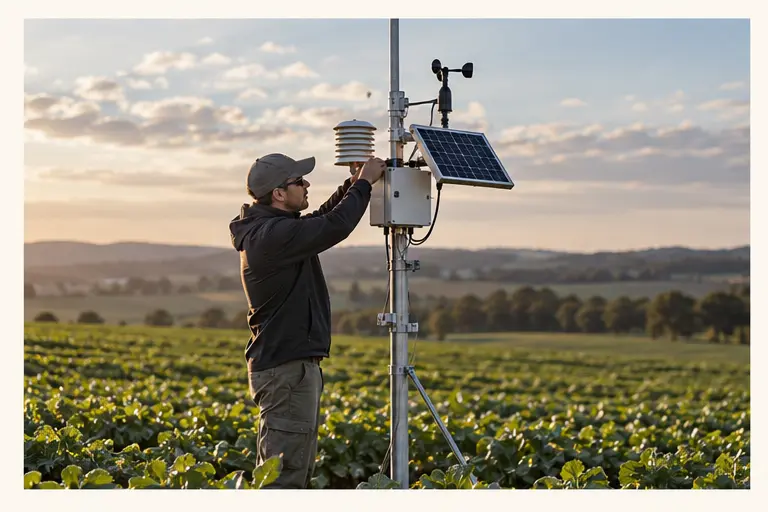
What a soil station contains
- Probe: sealed multi-depth sensors measure root-zone moisture and temperature continuously. pH, salinity and nutrients require careful technology selection and are never presented as a substitute for laboratory testing.
- Enclosure and logger: weather-resistant housing identifies the station, timestamps readings and stores data during a connection outage.
- Connectivity: a LoRaWAN gateway or cellular modem sends low-volume field data to the platform. A site survey checks coverage first.
- Power: long-life battery or solar panel sized for the device, transmission interval and local shading conditions.
- Supporting signals: a weather source, selected pheromone or smart traps, and grower/scout photos provide corroborating context.
How it survives the real world
Installation records exact depth, location, device ID, soil contact and responsible owner. The system watches for battery decline, missing readings, flatlines and implausible jumps. Hardware can be replaced without losing the farm evidence record.
Indicative pilot stack
For four management zones: 4-6 multi-depth stations, one local weather source, one gateway or cellular option, 4-8 targeted trap positions, installation, connectivity and an adviser-led review. The likely planning range remains A$8k-A$15k per founding farm; final costs require supplier quotes and a site survey.
Size a first-pass layout →