One product.
Six layers of evidence.
LivingShield is not a sensor dashboard. It is a decision-support system that makes the condition, source, confidence and required human check visible before a recommendation is acted on.
layerProbes, traps, weather, photos
layerTime, zone, quality, provenance
layerRules, trends, anomalies
layerCheck, prevent, record, review
01 - Field capture
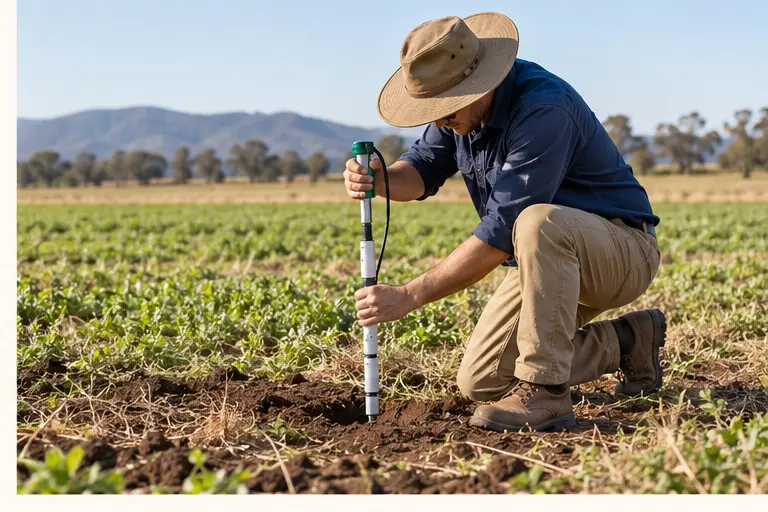
Each management zone can combine a multi-depth soil moisture and temperature probe, an optional local weather station, relevant pest traps and structured scout observations. Soil laboratory analysis remains the source of truth for nutrient and organic-matter assessment; in-field probes provide continuous context, not laboratory replacement.
02 - Secure ingestion and quality control
Every reading is stored with its device, depth, timestamp, zone and signal-quality status. The platform flags missing data, impossible values, a flatline that may indicate a stuck sensor, and abrupt changes that need an installation or irrigation check.
03 - Zone intelligence
Current product logic is explainable: calibrated thresholds, rate-of-change checks, weather context and a comparison with that zone's normal pattern. Anomaly detection can be introduced once a farm has enough clean history. Predictive machine learning comes later, after labelled local outcomes exist and have been independently tested.
04 - Human workflow and evidence
An alert becomes a field task: inspect a defined zone, add a photo or note, choose the least-harmful action with the appropriate adviser, and record the follow-up. The Crop Passport exports the evidence trail. It does not certify the farm or approve an input.